


- Travel Guide
- Crans-Montana
- Written locally, in Diogne
Crans-Montana, Switzerland:
more than a mountain resort
If you are planning a trip to the Swiss Alps, Crans-Montana deserves more than a quick visit.
Set high above the Rhône Valley in Valais, Crans-Montana combines spectacular Alpine scenery with something that is surprisingly difficult to find in a mountain destination: variety.
You can spend the morning hiking beside mountain lakes, play golf overlooking some of the Alps’ most impressive peaks, explore vineyards and traditional villages, or simply sit on a sunny terrace with a glass of Valais wine. In winter, the same landscape becomes a destination for skiing, snowshoeing and other snow activities.
And while the plateau is internationally known as a ski and golf destination, there is much more to discover beyond its most famous attractions.
This guide explains where Crans-Montana is, what makes it special, when to visit, what to do in every season, how to get there, where to eat, what to explore nearby and how to make the most of your stay.
Orientation
Crans-Montana at a glance
- Best for: skiing, hiking, golf, families, couples, lakes, mountain views and Valais wine.
- Best time for skiing: December to March, with conditions varying through the season.
- Best time for hiking and lakes: June to October.
- Ideal stay: 2 to 4 nights for a first visit; 5 to 7 nights for a slower stay.
- Car needed? No for the central resort; useful if staying in Diogne or exploring villages and vineyards.
- Nearest rail connection: Sierre/Siders, then funicular and bus connection to the centre.
- Languages: French is local, with German and English widely used in tourism.
Where is Crans-Montana?
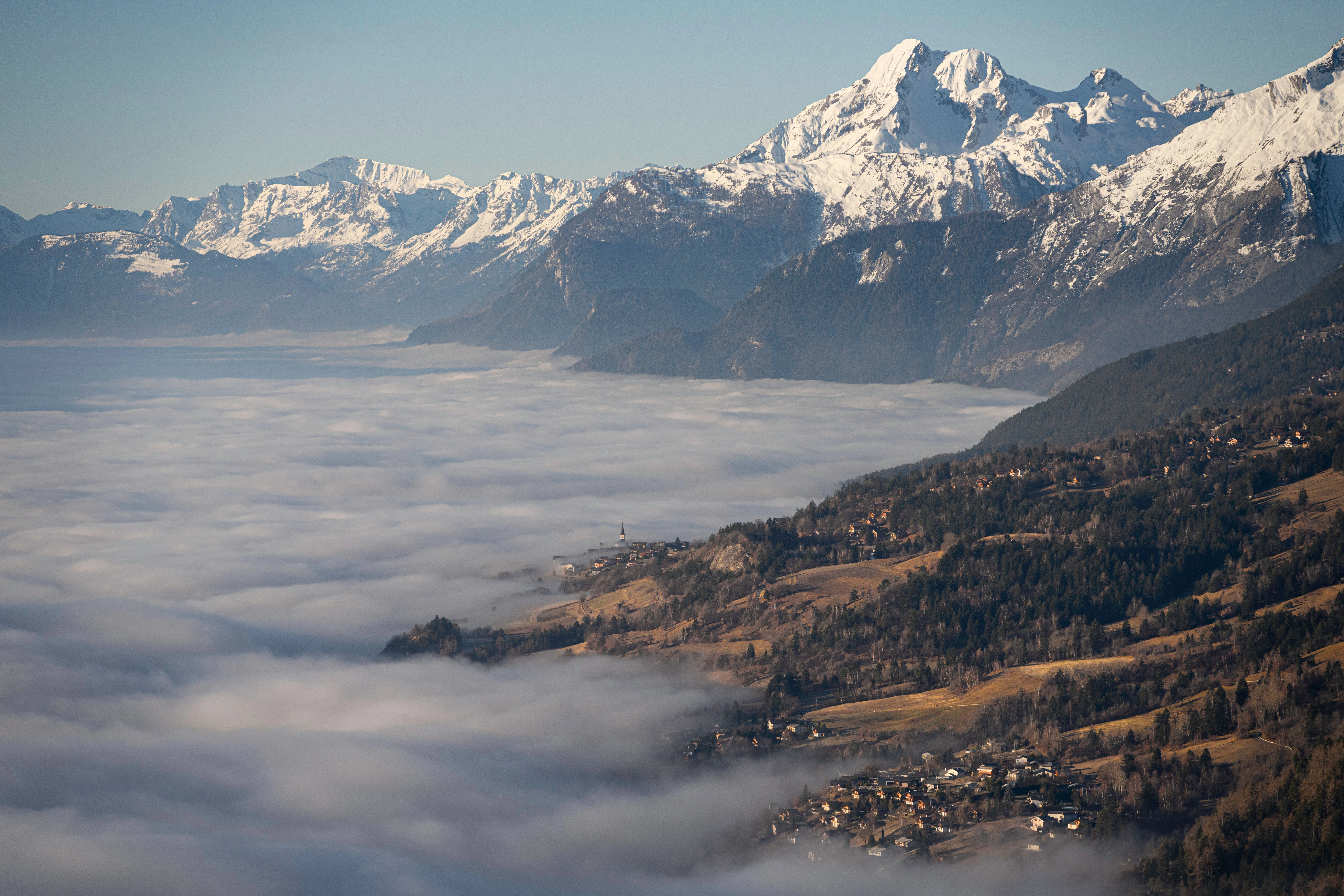
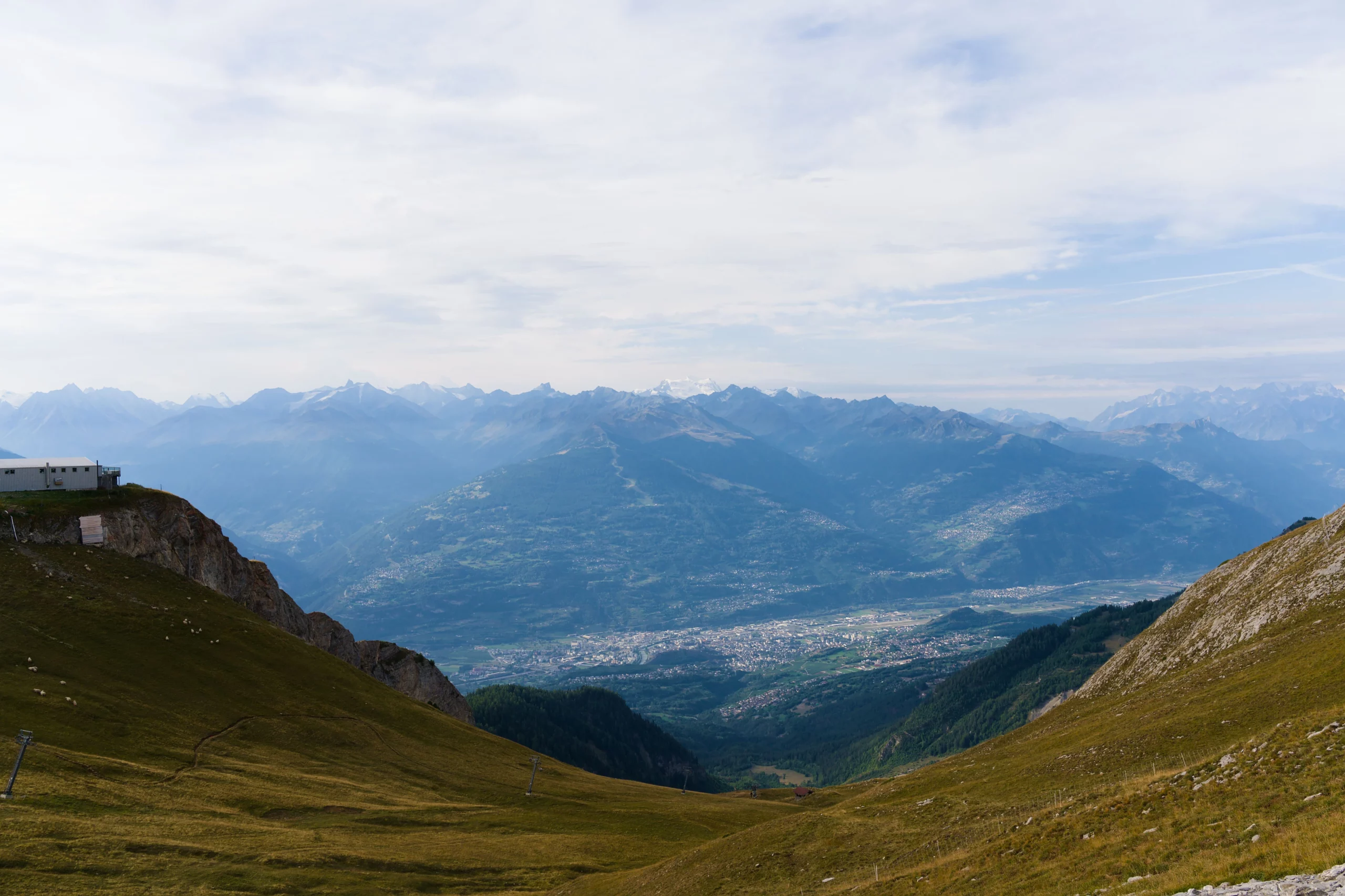
Crans-Montana is located in the canton of Valais in southwestern Switzerland, on a sunny high plateau above the Rhône Valley. The destination sits at around 1,500 metres above sea level, with mountains rising dramatically above it and the valley stretching below.
One of the easiest ways to understand the place is to think of it as a mountain destination with two personalities. There is the resort side, with restaurants, cafés, shops, golf courses and access to the ski area. Then there is the quieter surrounding landscape of forests, vineyards, traditional villages, mountain chalets, alpine meadows and lakes.
That combination is one of the reasons it works so well for longer stays: you are never far from a terrace, and never far from silence either.
The plateau sits roughly a thousand metres above the valley floor, which is why the light lasts so long here.
Finding it on a map
- Switzerland
- Canton of Valais
- Rhône Valley / Sierre
- Crans-Montana
The destination
Crans and Montana: what's the difference?
Crans and Montana grew up as separate settlements on the same plateau, each with its own character and its own history of early hotels. Today they function as a single destination, and most visitors move between the two without noticing where one ends and the other begins.
Around them sit the communes and villages that give the region its depth — Chermignon, Icogne, Lens and smaller hamlets such as Diogne. These are working villages rather than resort extensions: stone and timber houses, a church, a fountain, a café, vineyards below and forest above.
It helps to think of Crans-Montana as a wider destination rather than only the central resort. The trails, the lakes and the best views are spread across the whole plateau.
Character
Why visit Crans-Montana?
01
Spectacular alpine scenery
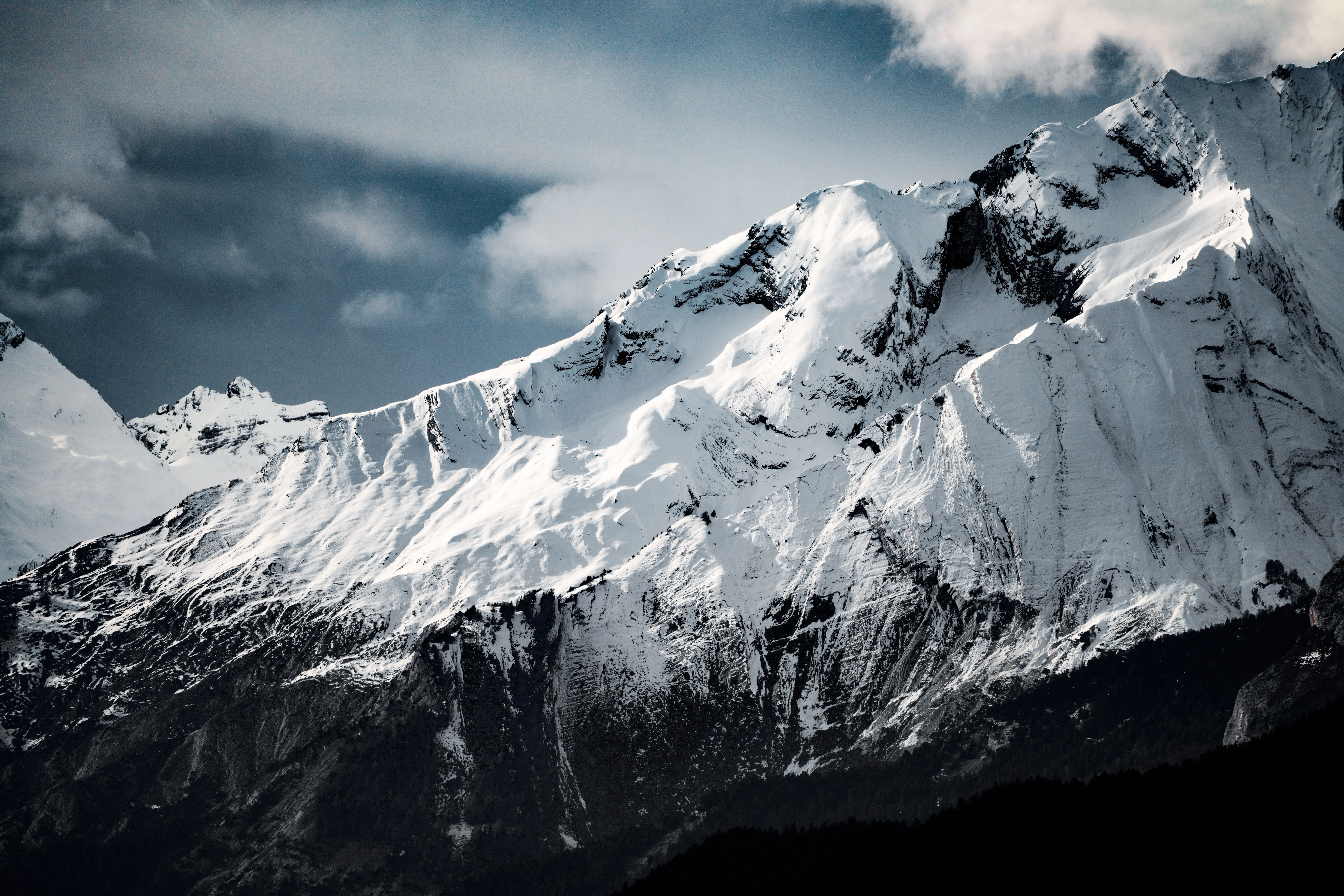
The plateau faces a wall of peaks across the valley, and the view changes hour by hour — sharp and blue in the morning, gold and hazy by evening. It is the kind of landscape you keep looking back at.
02
A sunny mountain setting
Facing south and sitting high, the plateau catches light for most of the day. That sunshine is the practical reason terraces, golf and lakeside afternoons all became part of local life.
03
Four-season travel
Snow in winter, meadows and lakes in summer, vineyards in autumn, long quiet light in spring. Very few Alpine destinations give you a genuine reason to come in all four.
04
Sport and nature together
Skiing, hiking, cycling and golf sit alongside forests, bisses and water. You can be active in the morning and completely still in the afternoon without moving far.
05
Villages, vineyards and local heritage
Below the resort, the slopes turn to vines and old villages. This is where the region's food, wine and traditions are still made rather than displayed.
Experiences
The best things to do in Crans-Montana
The list of things to do here changes with the season and with the kind of traveller you are. Walkers, families, golfers, skiers and people who mainly want a good view and a long lunch all find something, often on the same day. These are the experiences we would start with.
1. Explore the mountain landscape
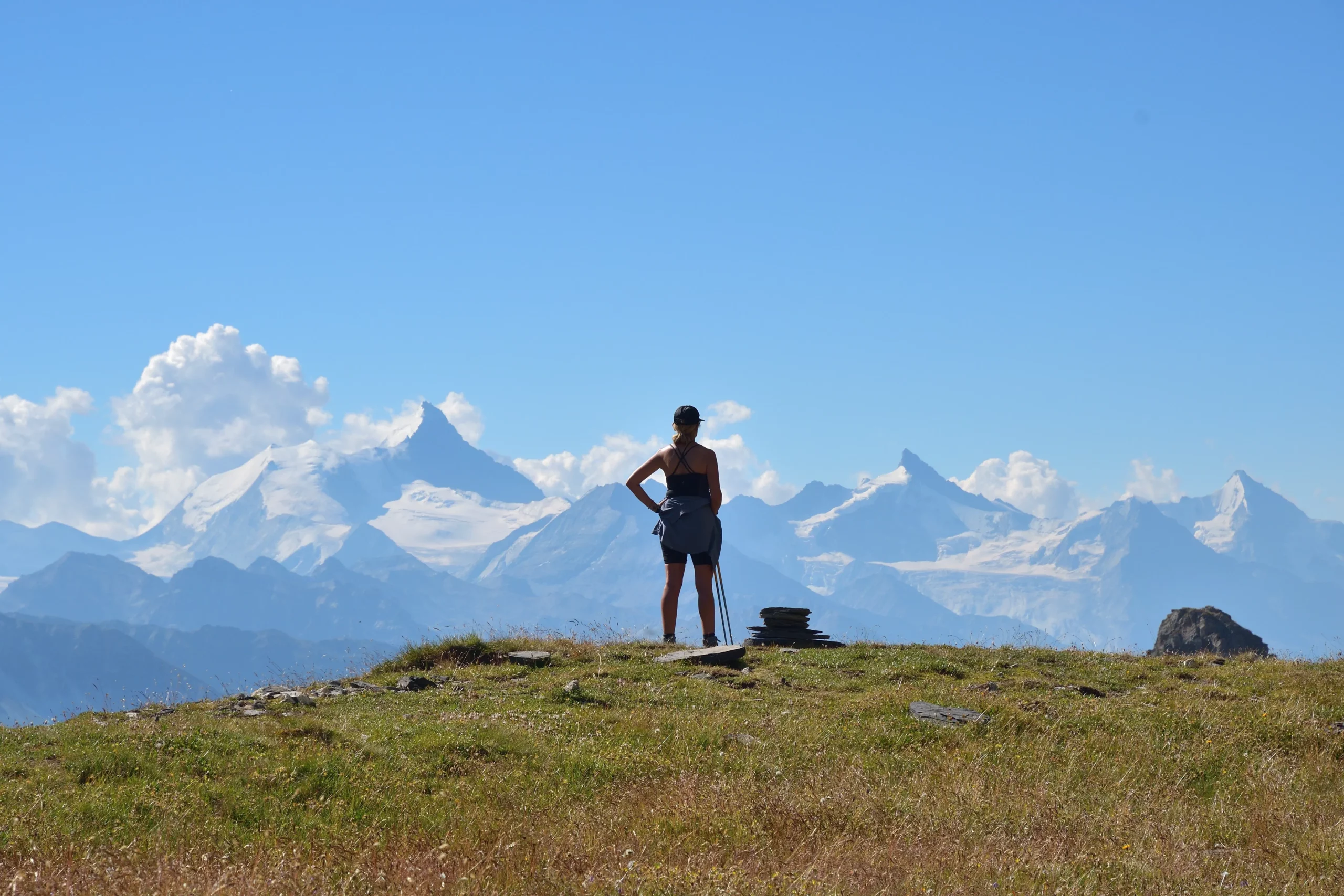
Walking is the simplest way to understand the plateau. Paths run through larch forest, along the old irrigation channels, across meadows and up towards the ridges, and many of them start directly from the villages rather than from a car park. Even an hour on foot changes your sense of the place.
If you want a route away from the busier trails, our Crans-Montana hiking guide to the Ertenze Valley is a good starting point.
2. Discover the lakes of Crans-Montana
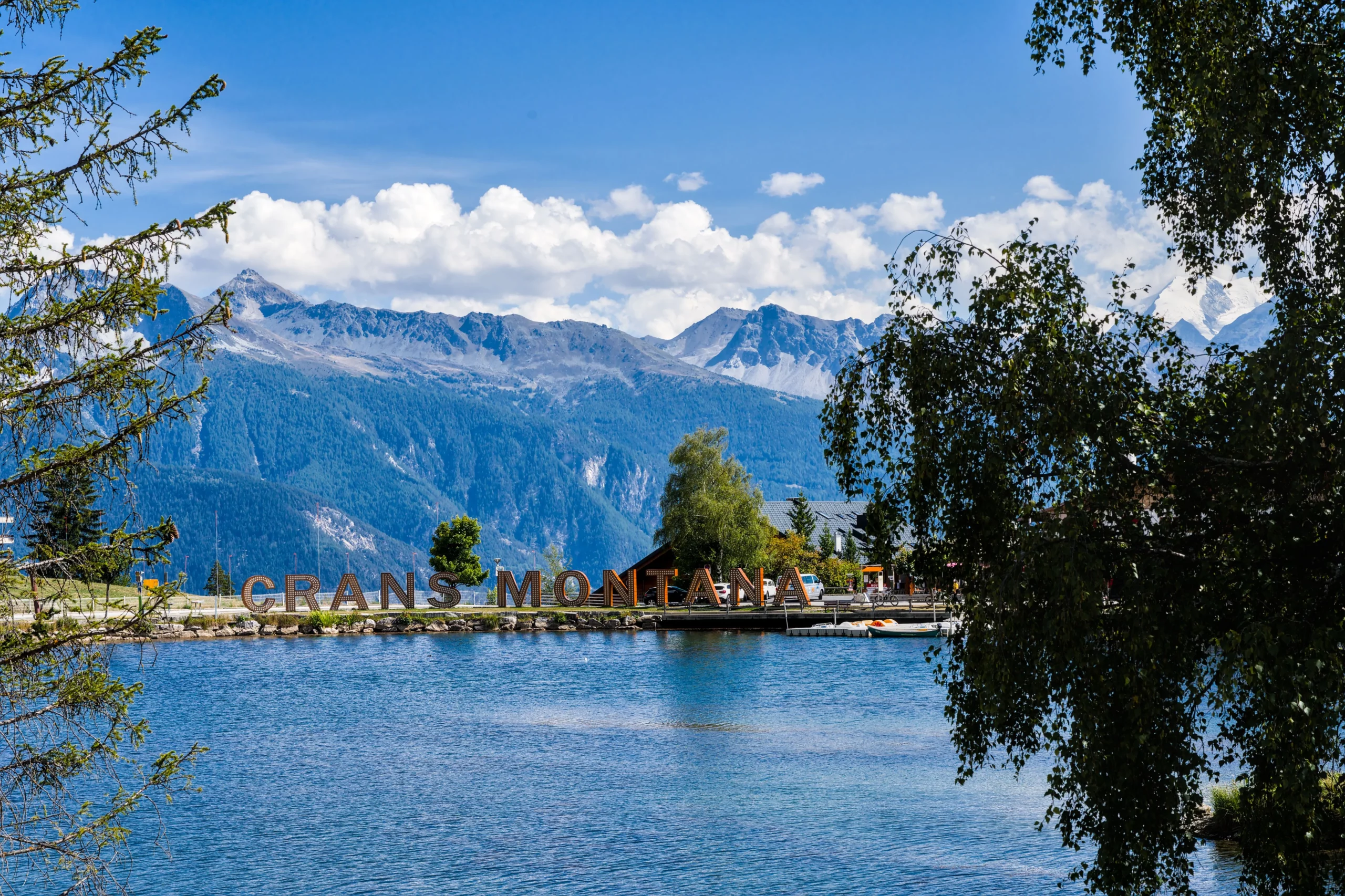
The lakes are the quiet signature of the plateau. Lac de la Moubra is the largest and the most sociable; Lac Grenon sits close to the resort and is easy to reach on foot; Étang Long is busy with a beach club and watergames in summer and connected with the worldwide known golf course Severiano Ballesteros. Lac d’Icogne is a hidden gem not far from the centre of Crans and Lac de Chermignon introduce you to nice walks among the meadows in Sommer and in Winter.
A themed water walk of roughly ten kilometres links the lakes and the bisses that feed them, and it can be walked in sections rather than all at once — which is what most people actually do.
Best for families
A lakeside afternoon needs no planning, no tickets and no fixed schedule — which is often exactly what a mountain holiday with children needs.
3. Go hiking in Crans-Montana
Hiking here is unusually forgiving. There are flat forest paths and bisse walks that suit almost anyone, mid-level routes through alpine meadows between mountain restaurants, and demanding high-mountain terrain for people who want altitude and a long day out.
For a route with real character, read our guide to hiking in Crans-Montana and the Ertenze Valley.
| Route | Best for | Practical note |
|---|---|---|
| Water Walk | Families and an easy half-day | Links the main lakes; walk only part of it if preferred. |
| Bisse des Miriouges | Easy local walk | Good for families and available in a stroller-friendly version. |
| Bisse du Tsittoret | Walkers wanting forest and valley scenery | Around 10.7 km; allow about 3 hours 20 minutes. |
| Bisse du Ro | A memorable longer walk | Around 11.3 km; includes exposed sections and a high footbridge, so it is not suitable for visitors with vertigo. |
| Ertentse Valley | An active mountain day | Best for confident walkers with proper footwear, picnic and changing-weather layers. |
Check route status and weather before leaving, particularly after rain or early and late in the season. Official walking routes and maps
4. Ski, snowboard and ski touring
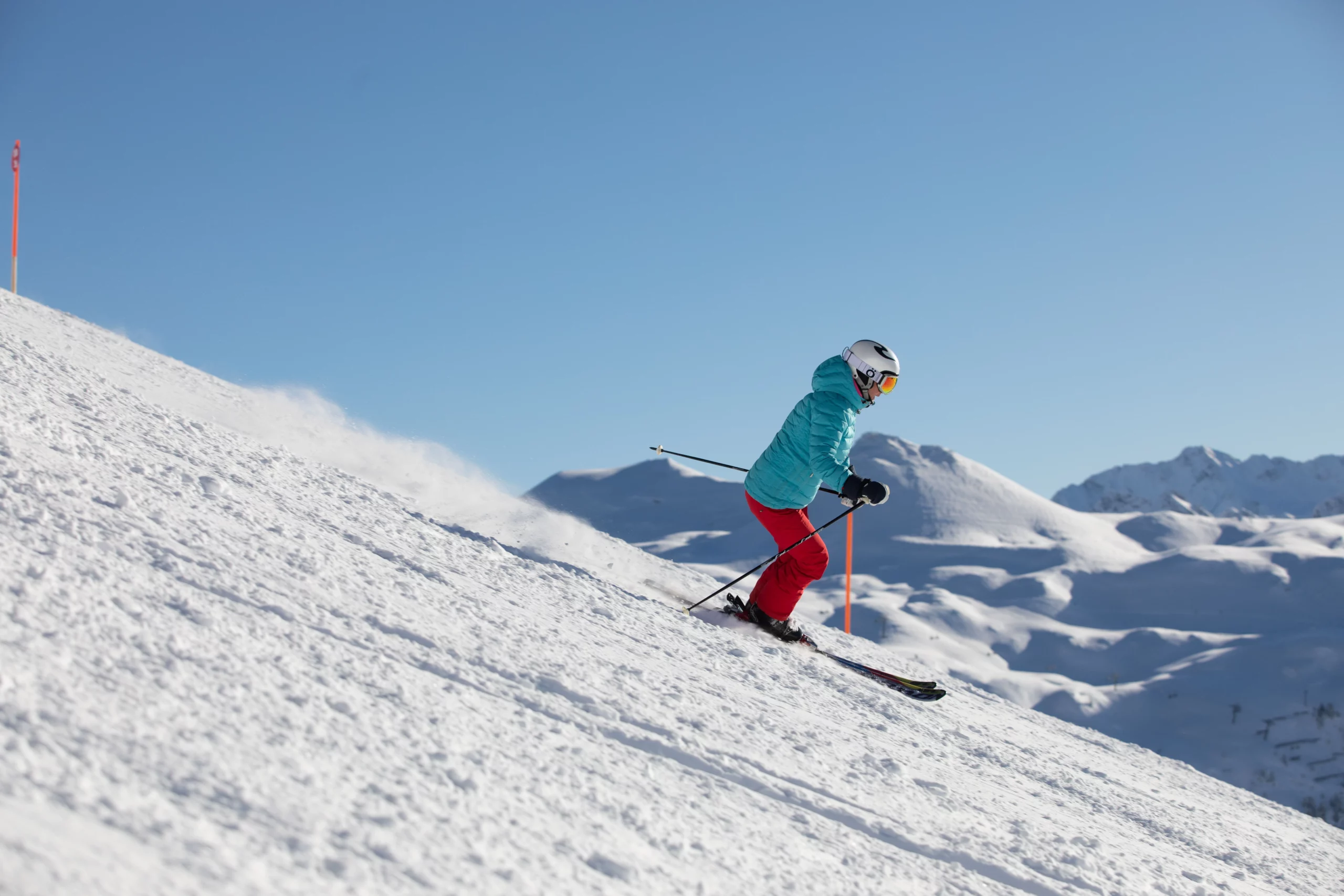
Crans-Montana has around 140 kilometres of pistes and 24 lifts between 1,500 and 3,000 metres. The mountain is particularly good for intermediate skiers, with long red runs, broad pistes and open views across the valley.
First-time skiers and young children should begin at Snow Island or the Snow Garden at Arnouva. These are dedicated learning areas with gentle terrain. Once confidence grows, there are blue pistes to progress onto, but true beginners should not assume that every blue run is easy to reach from every lift.
Confident skiers can explore the higher mountain and the World Cup sectors around Bellalui, La Piste des Dames or La Nationale. The East part of the ski area goes up to the Plaine-Morte Glacier 3000 m, the Toula black slopes and Aminona area, the paradise for carving fans. Snowboarders and freestyle skiers have a snowpark near Cry d’Er.
About ski tickets: we strongly advise to buy it online in advance, as you may have a better deal. Good to know Crans-Montana belongs to the Epic Pass. If you own one, the first day, you will have to get a local ticket at the desk. Plan this in your organization.
A good ski day is simple: start early, ski the higher slopes before lunch, stop at a mountain terrace, then return to lower runs in the afternoon. Check live lift and piste conditions every morning because wind, snow and visibility can affect the upper mountain.
For those looking to explore the mountains beyond the ski slopes, ski mountaineering in Crans-Montana offers a unique way to discover the spectacular winter landscapes of the Valais Alps. Follow scenic routes through snowy forests and high-altitude terrain while enjoying breathtaking views and a true sense of alpine adventure.
5. Ski is not your trip? Take the mountain lifts for the views or enjoy winter hiking
The lifts are not only for skiers. Cry d’Er is the classic first ride, with a terrace looking straight across the valley and easily accessible to beginners. For clubbers a DJ animate the early afternoon before joining the after-ski at the bar Zerodix; Les Violettes takes you in the easter part of the ski area; and the glacier of the Plaine Morte sits at the top of the mountain, a completely different landscape from the plateau below. We, as good skiers prefer this area, as they are amazing slopes and consequently more confident skiers.
Opening periods and services vary through the year, so check the official Crans-Montana ski area website before you plan a day around a specific lift.
Discover the peaceful side of the mountains with winter hiking and snowshoeing in Crans-Montana, following scenic trails through snowy forests and alpine landscapes. Whether on foot or snowshoes, it’s a wonderful way to enjoy the fresh mountain air and spectacular views of the Valais Alps. Check if the trails are open.
Season
Crans-Montana in Summer
Summer may be the plateau’s strongest season, and it is certainly its most relaxed. The trails dry out, the lakes warm up, the golf courses fill and the mountain restaurants open their terraces. Days here tend to stretch: a walk in the morning, swimming or paddleboarding after lunch, a village and a glass of wine in the evening.
Cyclists have both road climbs from the valley and marked mountain-bike routes; families have lakes, easy paths and outdoor activities within minutes of each other; and the lifts that carry skiers in winter carry walkers to high ground instead.
For a family-focused version of this season, read our guide to summer in Crans-Montana.
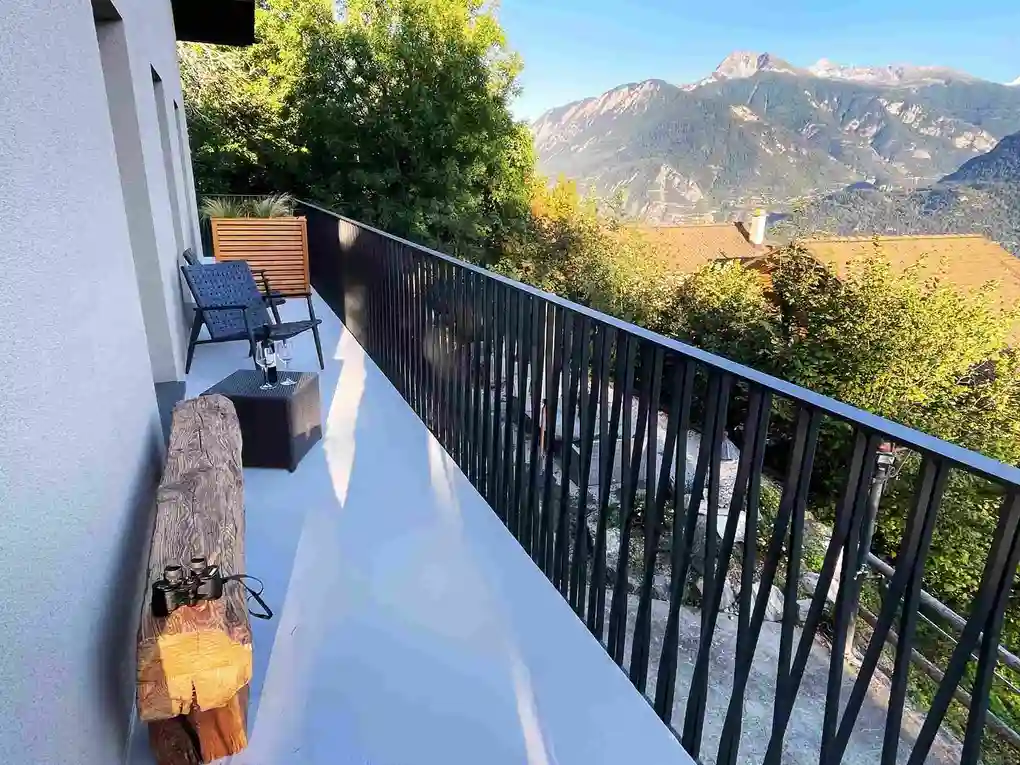
Best in summer
Start early to enjoy fresh air and the light on the alpine peaks Weisshorn and Dent-Blanche opposite is worth the alarm.
Season
Crans-Montana in Winter
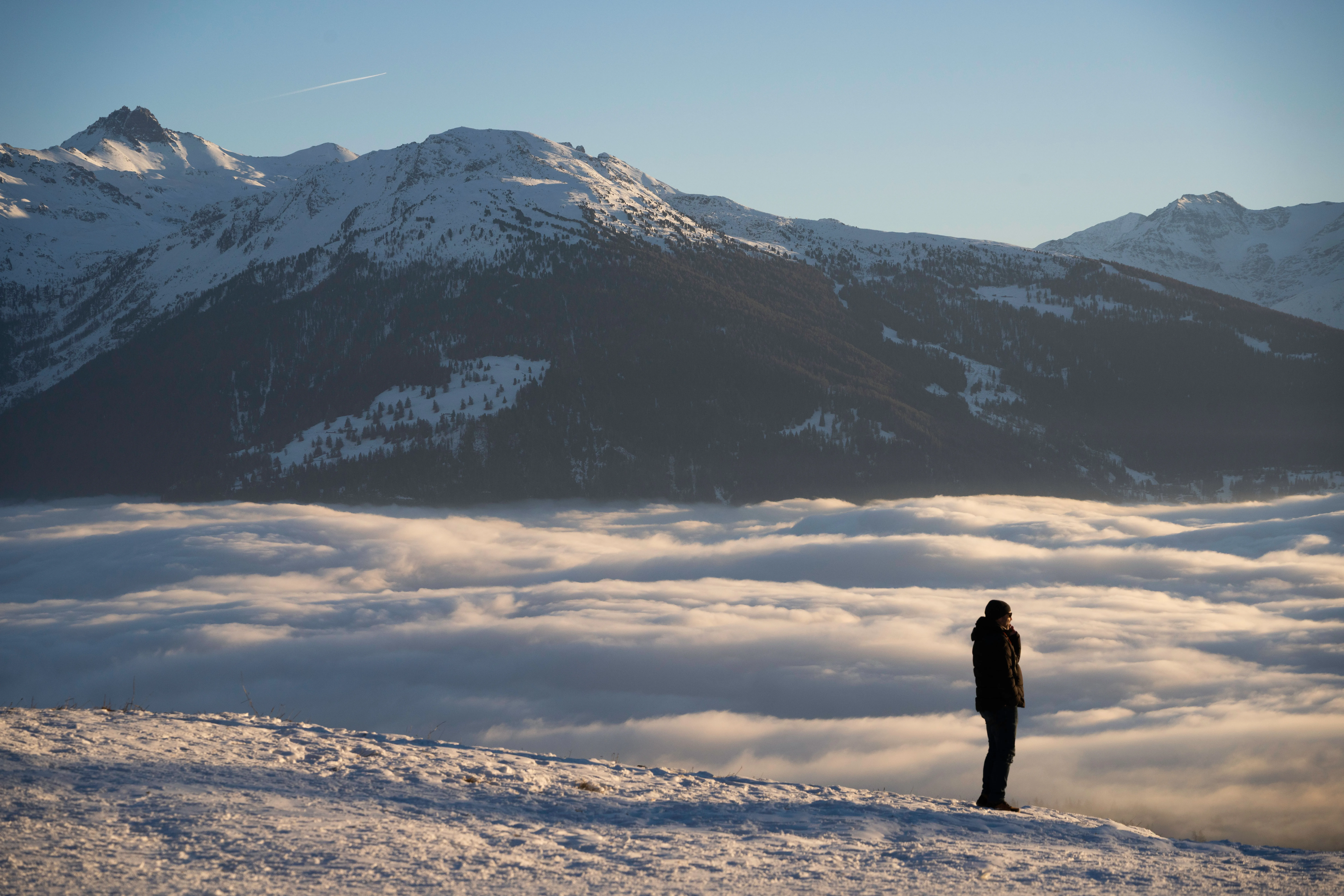
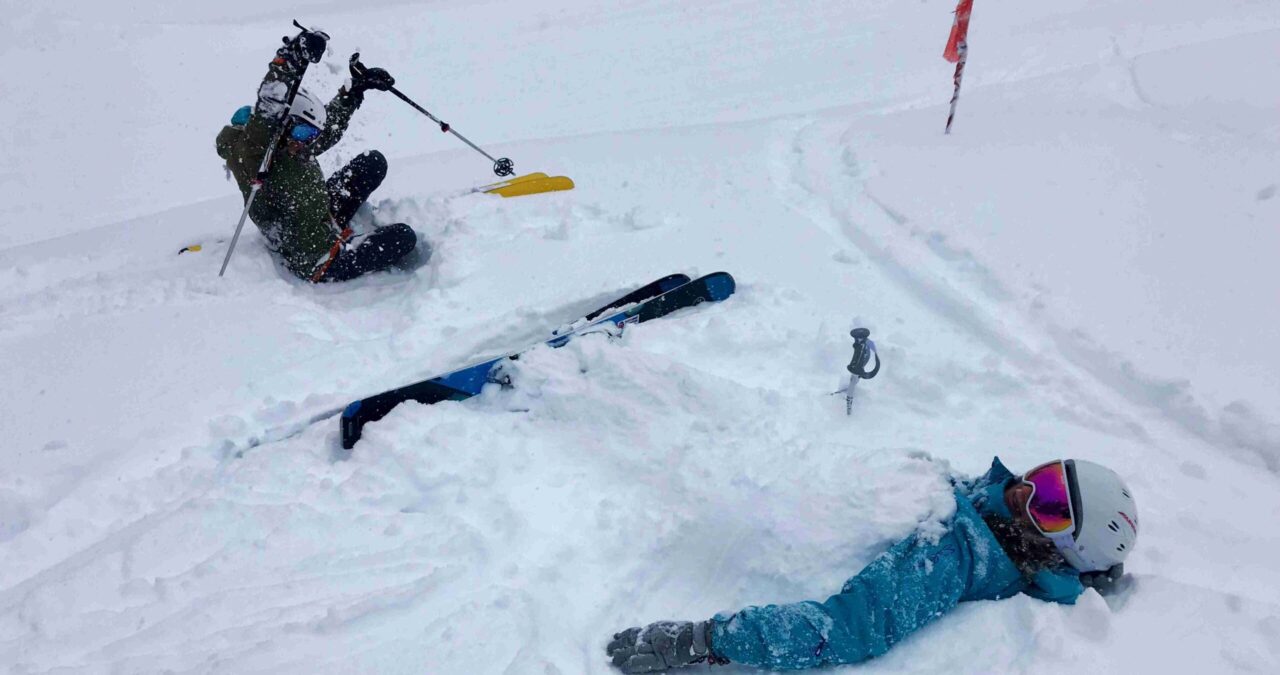
Winter is what most people picture first: a large ski area spread across the mountain above the plateau, with runs for beginners and long descents for confident skiers, plus snowboarding, ski touring and cross-country trails.
But skiing is only one way to spend the season. Winter walking paths are cleared and signposted, snowshoe routes lead into quiet forest, sledging and ice skating keep families busy, and mountain restaurants are as much a destination as the slopes. Plenty of guests here never put on skis at all.
Snow conditions, lift openings and trail grooming change through the season — our complete Crans-Montana winter guide covers how to plan around them, and the official tourism site publishes current conditions.
Heritage
Golf in Crans-Montana
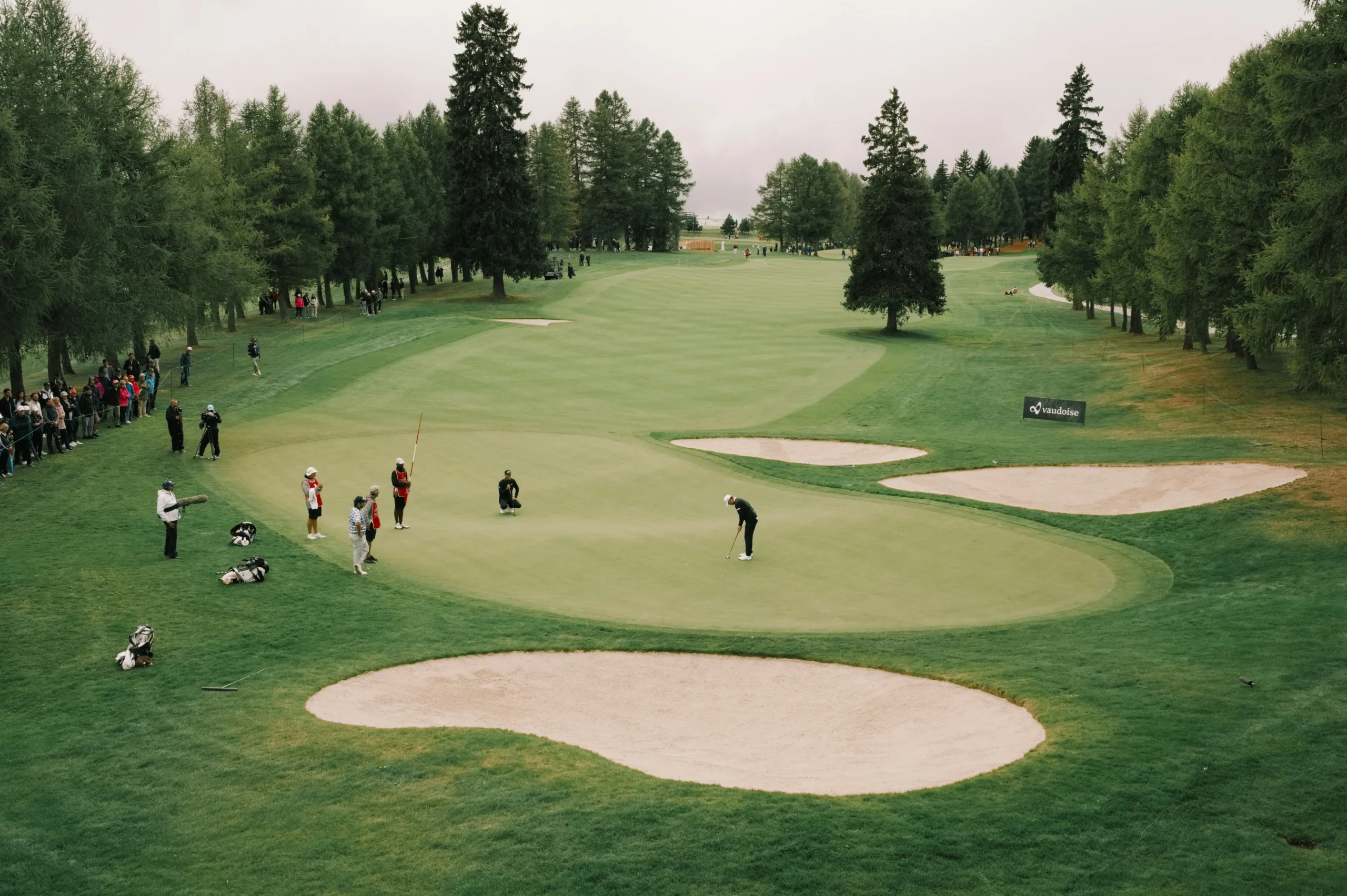
Golf arrived on the plateau in the early twentieth century and never left. Playing here is less about the scorecard than about the setting: fairways at 1,500 metres, larch trees, and a horizon of peaks across the valley.
The Severiano Ballesteros course is the 18-hole centrepiece and the one with the European Masters history. The Jack Nicklaus 9-hole course offers a shorter, more compact round, and the Noas course is an approachable option for casual play and practice.
Even if you do not play, the courses are part of how the destination looks and feels — open green space in the middle of the resort, crossed by walking paths.
Valais
Discover Valais wine
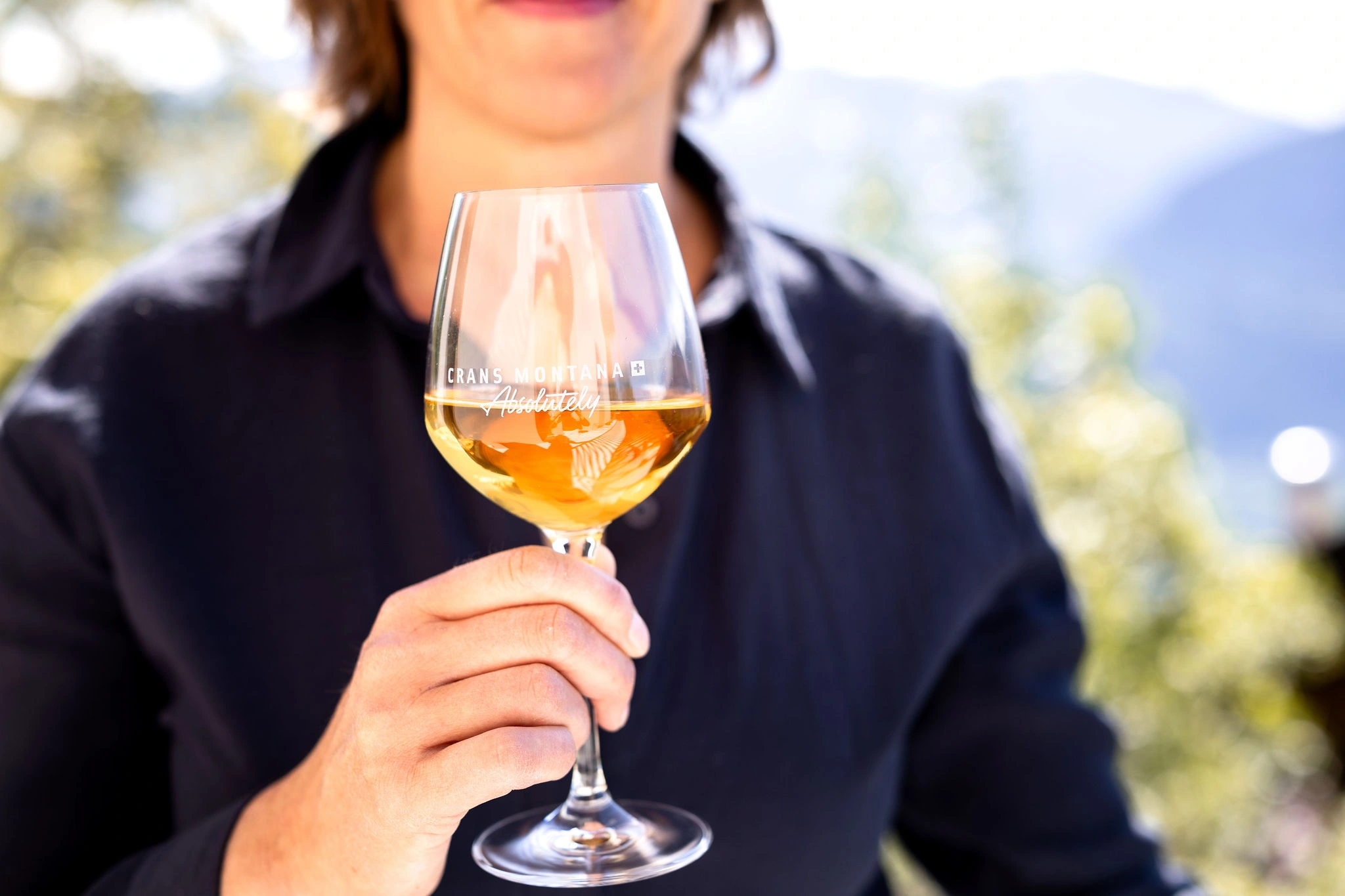
Below the plateau, the slopes of the Rhône Valley are covered in terraced vineyards — one of the highest and steepest wine landscapes in Europe. Valais is Switzerland’s largest wine region, and much of what is grown here never travels beyond the canton, which is part of the pleasure of drinking it in place.
Look for Petite Arvine, a white with a salty, citrus edge that belongs to Valais and nowhere else; Humagne, in both its white and red forms; and Cornalin, a deep, spiced red that almost disappeared before being brought back by local growers.
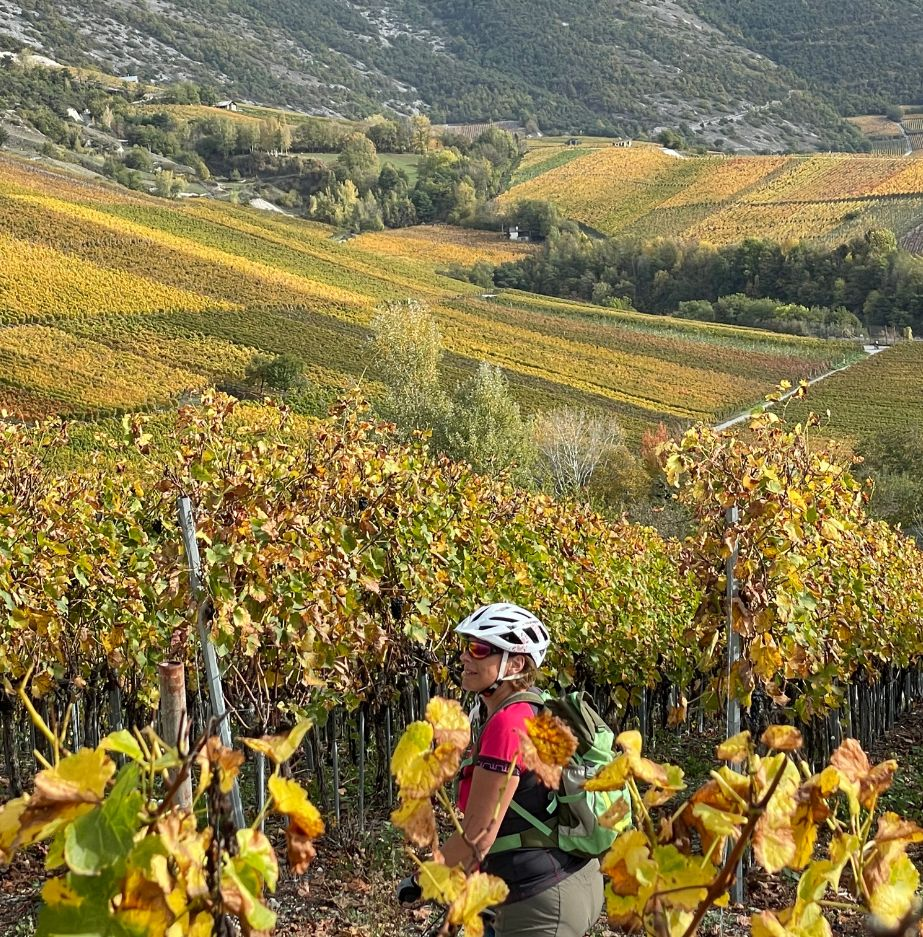
A morning in the vineyards below Lens or Chermignon, followed by a tasting at a small cellar, is one of the most local things you can do here — and it works in every season except deep winter.
Table
What to eat in Crans-Montana
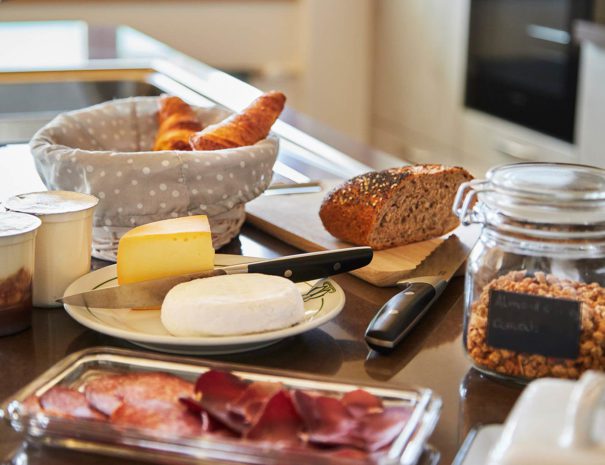
Valais cooking is mountain food, and it is unapologetic about it. Raclette is the local ritual rather than a tourist dish — melted cheese scraped onto a plate, eaten with potatoes, pickles and dried meat, repeated until someone gives up. Local cheeses, rye bread, apricots, pears and mountain herbs fill the rest of the table.
Alongside the traditional carnotzets and mountain restaurants, the resort has contemporary kitchens and international cooking, so a week here does not have to mean a week of cheese. Regional wines are almost always the better pairing.
Local knowledge
Want to eat like a local?
Ask us about the places we personally recommend during your stay. From traditional Valais dishes to relaxed mountain restaurants, we are happy to share our local favourites.
Beyond the resort
Explore the villages around Crans-Montana
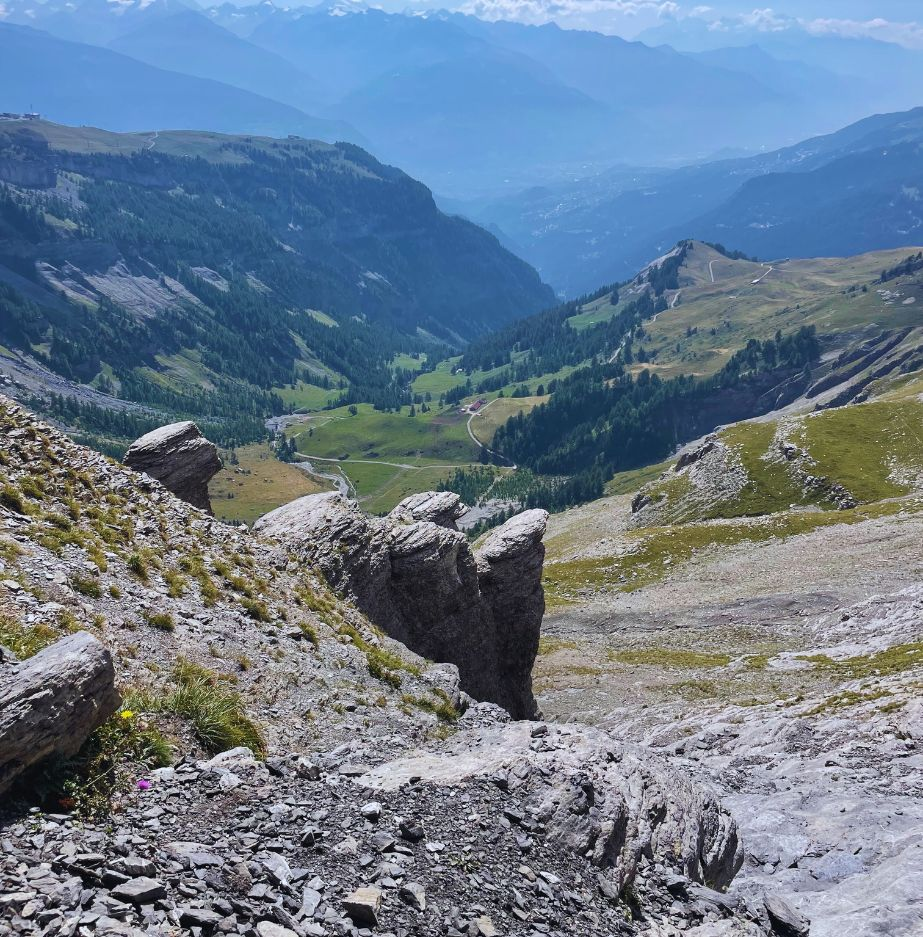
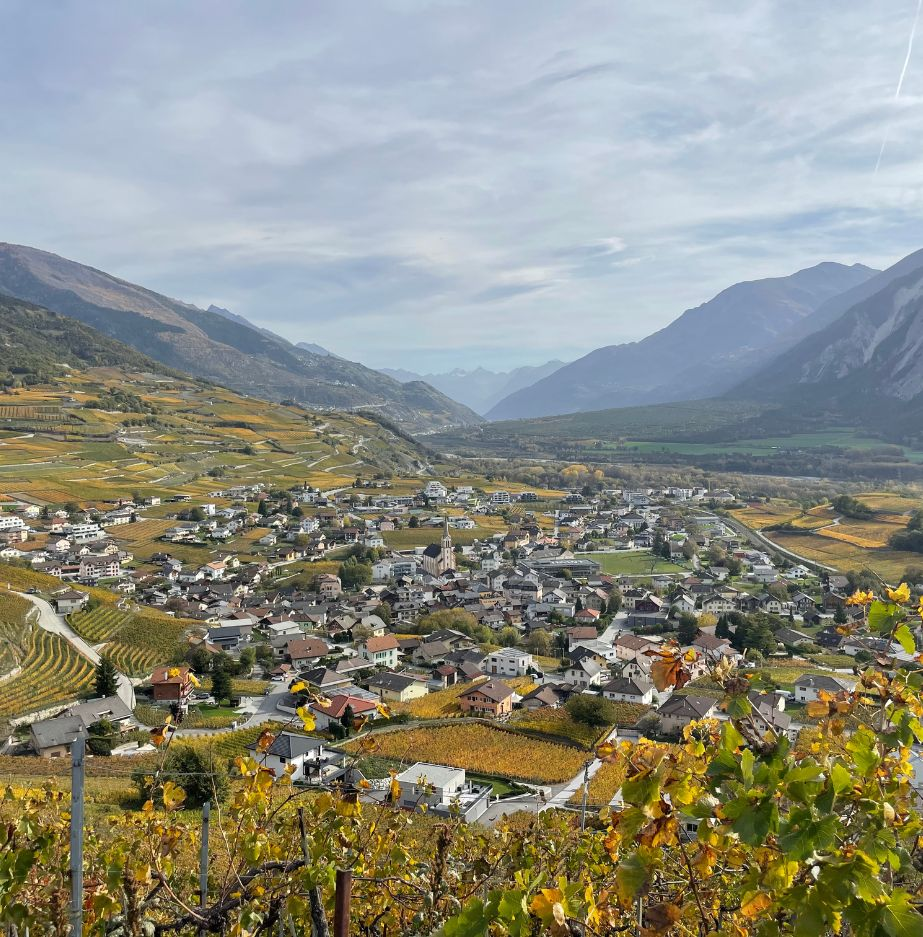
The resort is only one layer of this region. Drive or walk ten minutes in almost any direction and you are in a village where daily life has nothing to do with tourism — and where the views are frequently better.
Icogne
The lowest and quietest of the four, spread over slopes between forest and vineyard, with a small lake nearby and paths leading up towards the plateau.
Chermignon
A working village of hamlets and cellars, closely tied to wine and to the terraces below. A good place to understand how the valley and the mountain depend on each other.
Lens
Set on a ridge with wide views across the Rhône Valley, Lens has a strong village centre and a long local history — one of the easiest short excursions from the resort. It also hosts the museum Fondation Opale which exhibitions are always linked to aboriginal arts and the Alaïa Chalet for fun activities like trempoline, skate or paddle.
Diogne
A small hamlet in the heart of Valais, and where La Forge de Diogne sits. Quiet, green and about fifteen minutes from Crans-Montana — close enough for everything, far enough to hear nothing at night.
For more of them, you can discover the villages and hidden places around Crans-Montana.
Timeline
A short history of Crans-Montana
The plateau was farmland and summer pasture long before it was a resort. Its modern story is barely more than a century old, and it moves quickly.
1893
The first hotel opens on the plateau.
1906
Golf arrives and begins to shape the destination.
1911
A funicular connects the valley to the plateau, and the area's ski racing history begins.
1936
The first ski lift in Valais is built here.
1950
The Crans–Cry d'Er cable car opens.
1987
Crans-Montana hosts the Alpine Ski World Championships.
Winter, differently
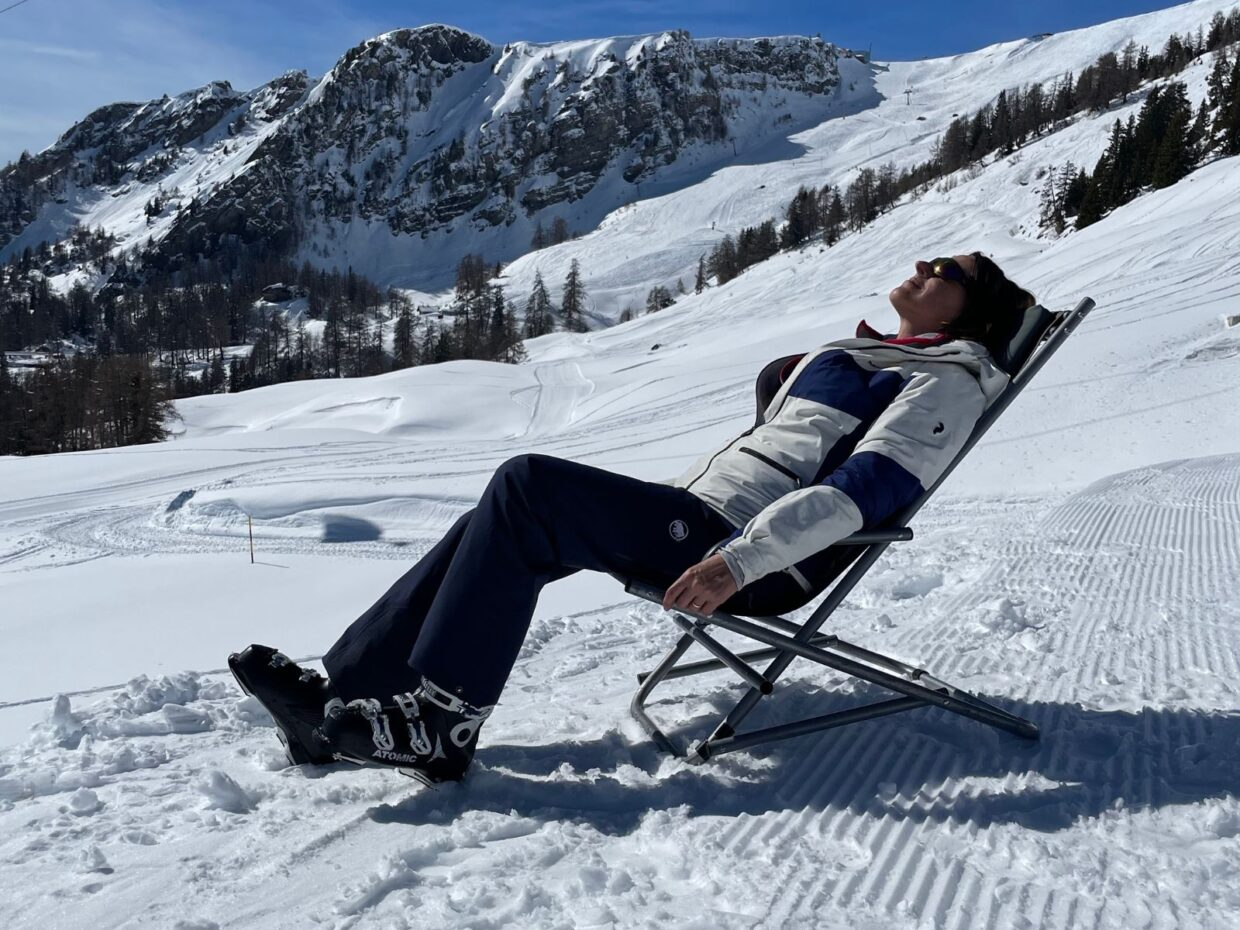
What can you do in Crans-Montana if you don't ski?
A surprising number of winter guests never buy a lift pass. The plateau is wide, sunny and walkable, and cleared winter paths make it easy to spend a whole day outdoors at your own pace.
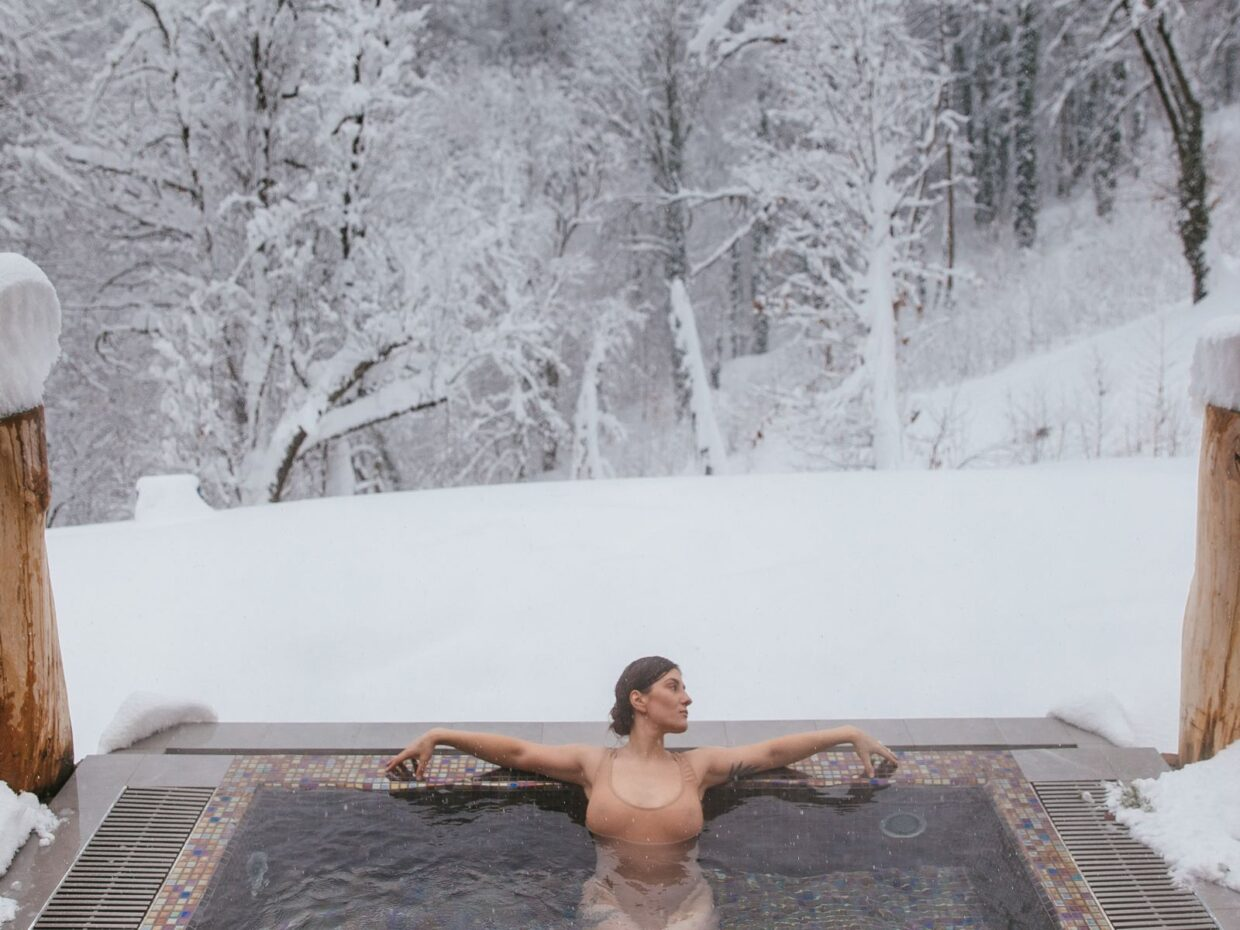
Snowshoeing takes you further into the forest; sledging and ice skating fill an afternoon; wellness and spa time fills the rest. Mountain restaurants are reachable by lift with a pedestrian ticket, cafés and shops line the resort streets, and cultural venues and exhibitions run through the season.
Good to know
Most lift companies sell pedestrian tickets, so you can reach a high terrace for lunch and the view without skiing a metre.
Who it suits
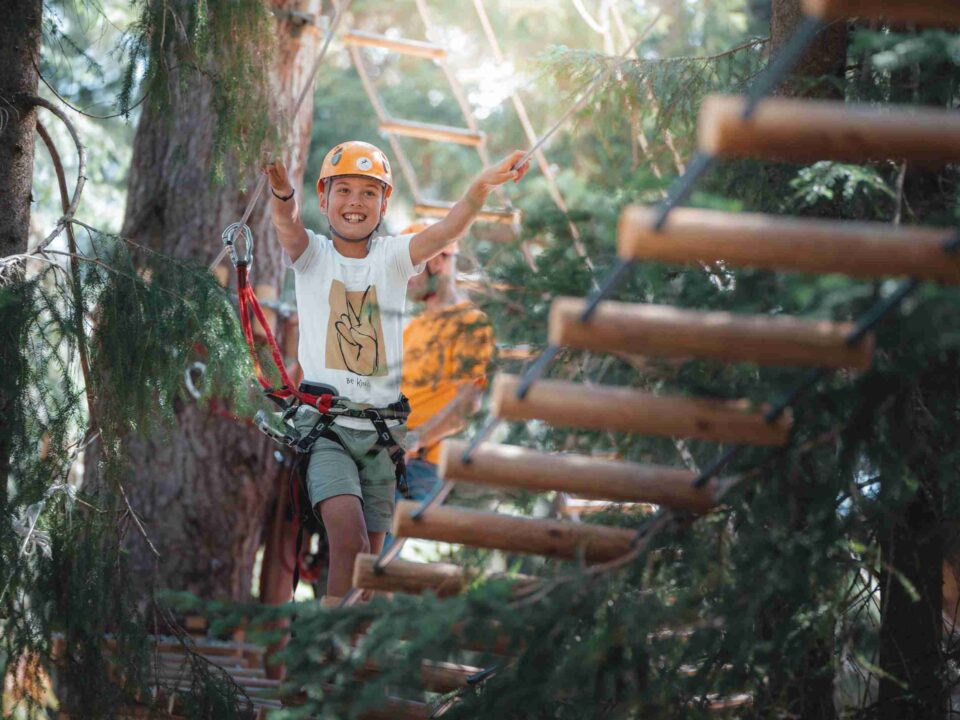
Is Crans-Montana good for Families?
Yes — largely because nothing is far away. The lakes are the natural centre of a family day in summer, with swimming, easy circular walks and shaded picnic spots. Trails are gentle enough for young children and interesting enough for teenagers.
In winter, snow activities, sledging and beginner slopes work without committing the whole family to a full ski week. And because distances are short, plans can be rebuilt at breakfast depending on weather and mood — which, with children, is the feature that matters most.
Who it suits
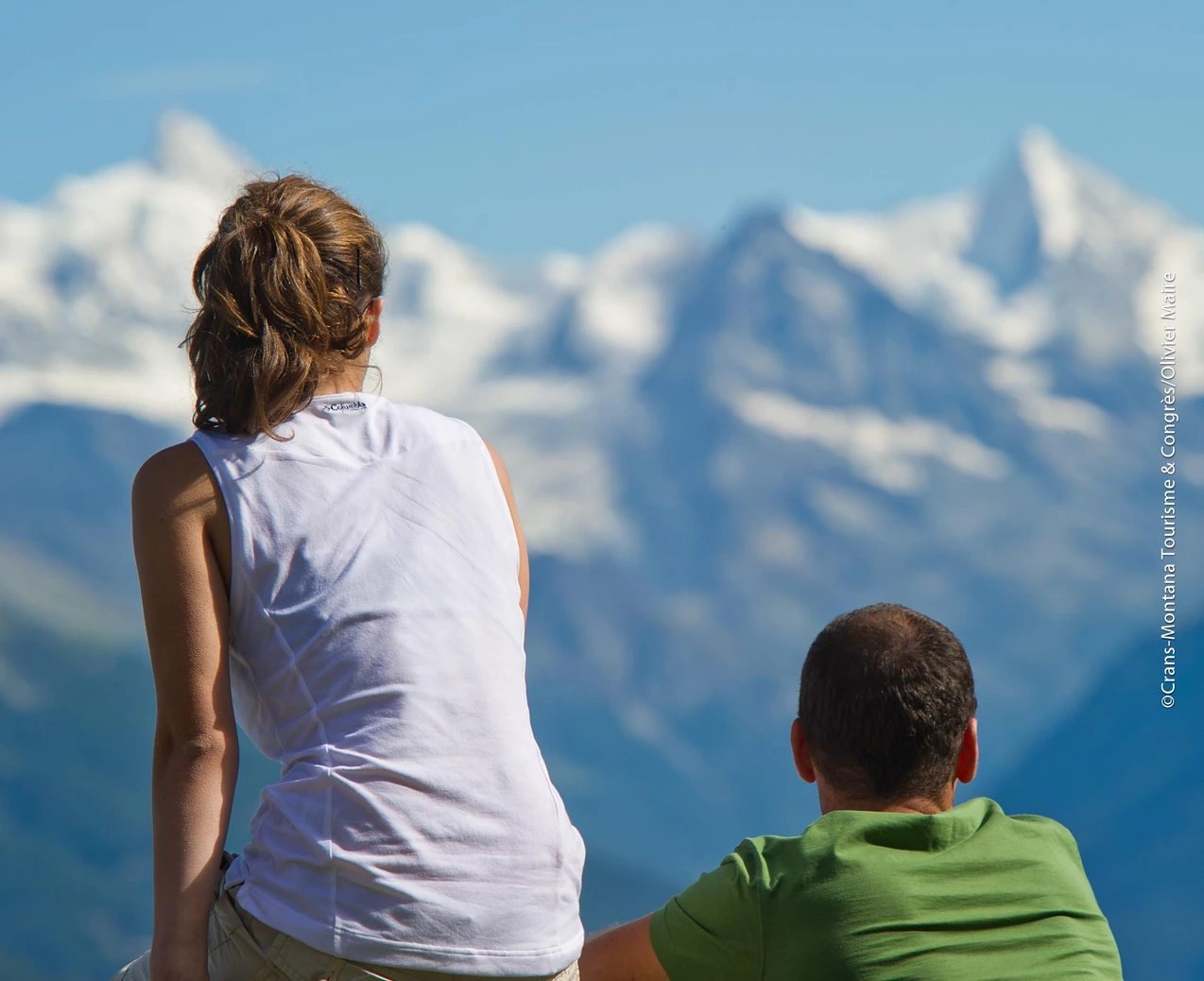
Is Crans-Montana romantic for couples?
It is, and particularly for couples who like their days unhurried. Scenic walks that end at a terrace, vineyards and cellars below the plateau, wellness in the afternoon, and dinner somewhere small in a village rather than in the middle of the resort.
The best hour is late: the peaks opposite turn copper, the terraces empty, and the plateau goes very quiet.
Best for couples
Stay outside the resort. A village base makes evenings feel considerably more like a retreat than a holiday.
Practical
How to Get to Crans-Montana
Getting here is straightforward, and the last part of the journey is one of the nicest.
By train. Travel to Sierre/Siders on the main Valais line. From Sierre railway station the Crans-Montana funicular is roughly a five-minute walk, and the ride up to the plateau takes around 13 minutes, climbing steeply above the vineyards as it goes.
By bus. Regional buses connect Sierre and Sion with the plateau and with the surrounding villages, which is also how you reach Diogne without a car. Our bus stop is Chermignon, Diogne.
By car. Leave the A9 motorway at Sierre and follow the mountain road up to the plateau. It is a scenic climb through vineyards and villages, with switchbacks near the top.
Timetables, fares and seasonal services change, so check current schedules with the Swiss transport operators or the official Crans-Montana tourism website before travelling.
By train
Sierre / Siders → Funicular → Crans-Montana
By car
A9 → Sierre → Crans-Montana
By bus
Sierre / Sion → Crans-Montana
Local tip
If you are arriving by train, the funicular from Sierre is one of the easiest ways to reach the mountain resort — and it saves you the drive up in winter conditions.
Planning
How many days do you need in Crans-Montana?
2 nights
Good for a short mountain escape. Enough for one big day outdoors, one long lunch and one memorable view.
3–4 nights
Ideal for a first visit. Time for the lakes, a proper hike or a ski day, a village or two and an evening that is not rushed.
5–7 nights
Best for exploring the destination properly: higher trails, vineyards, neighbouring valleys and the days where you deliberately do very little.
Accommodation
Where to stay in Crans-Montana
Accommodation in Crans-Montana falls broadly into two choices. Staying in the resort itself puts you within walking distance of the lifts, restaurants and shops, which suits short ski trips and visitors without a car. Staying in one of the surrounding villages trades that convenience for space, silence and a more local sense of the valley.
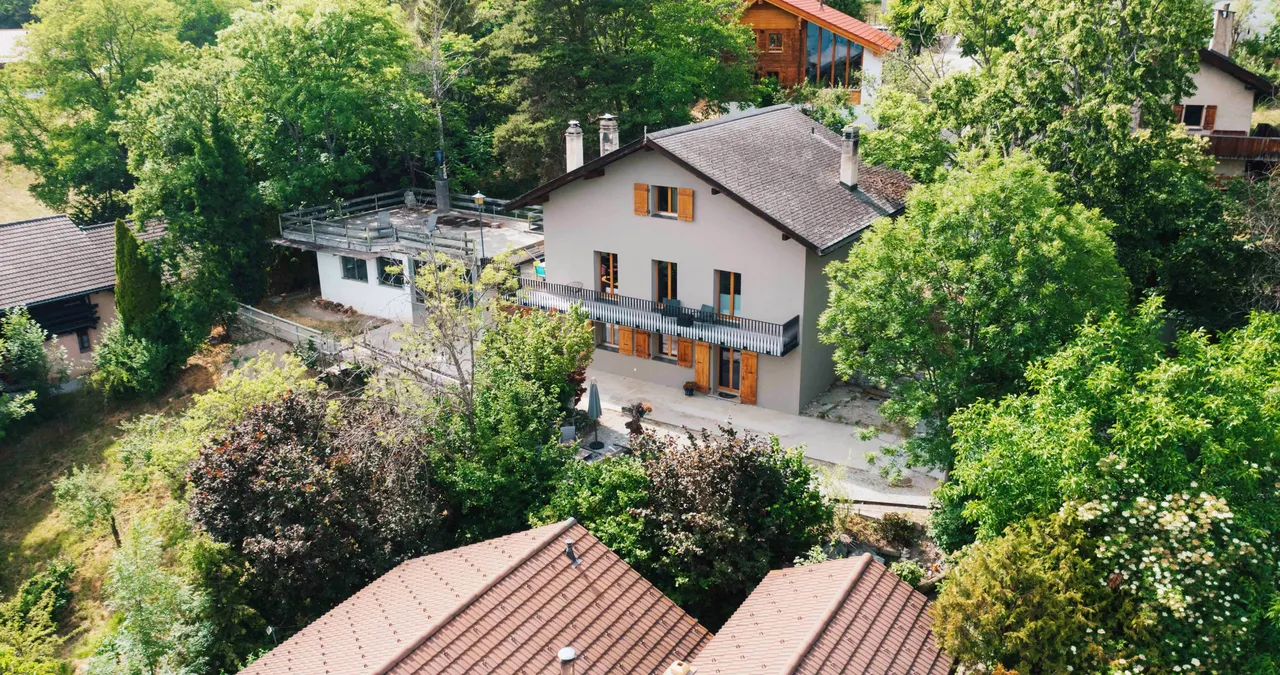
For travellers looking for a more personal and peaceful base, La Forge de Diogne is located in the village of Diogne, around 15 minutes from Crans-Montana. The property combines private rooms and spacious apartments in a restored former forge, offering a quieter alternative to staying directly in the resort while keeping Crans-Montana within easy reach.
Stay near Crans-Montana
A quieter base for discovering the mountains, villages and Valais
Planning
A Suggested 3-Day Crans-Montana Itinerary
Day 1
Find your bearings. Walk the resort and the nearest lakes, take a lift up for the first wide view of the valley, and finish with an unhurried dinner.
Day 2
Go higher and then lower. A hike in the morning — forest, bisse or meadow depending on your legs — then a village in the afternoon and a Valais wine to end it.
Day 3
Choose your own: golf, cycling, a family activity, a ski or snowshoe day, or simply a slow mountain day with a long lunch and a good view.
Local tip
The best Crans-Montana itinerary is not necessarily the one with the most activities. Leave enough time to enjoy the place.
From the house
Our local guide to Crans-Montana
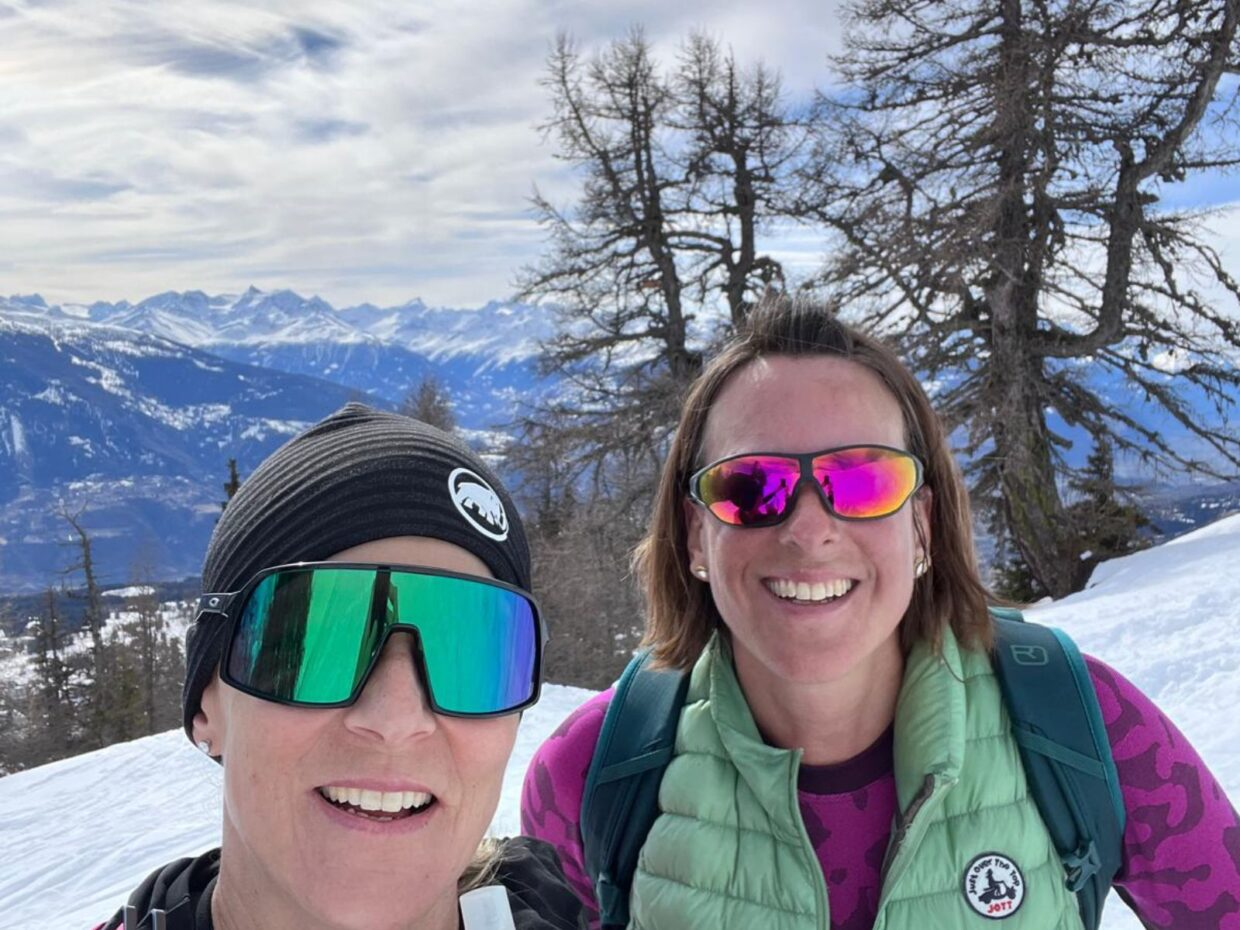
“Some of the best places are not always the ones that appear first in a search result. These are a few of the experiences we love sharing with guests.”
Our favourite easy walk
Grand Bisse de Lens, direct from La Forge de Diogne
Our favourite mountain view
From our balcony or the Glacier La Plaine-Morte when lifts are open.
Best lake for a relaxed afternoon
La Moubra, for a refreshing swim or a chilling tour in paddle or pedalo
A place visitors often overlook
Historic villages: Lens, Chermignon, Montana-Village, Randogne at altitude 1000m, all connected with walking trails.
Our favourite local food experience
Our favourite time of day in the mountains
early, before arriving of the crowd
Questions
Frequently asked questions about Crans-Montana
Where is Crans-Montana in Switzerland?
Crans-Montana sits in the canton of Valais, in southwestern Switzerland, on a south-facing plateau roughly 1,500 metres above the Rhône Valley. The nearest valley town and railway station is Sierre/Siders.
Is Crans-Montana worth visiting?
Yes — particularly if you like having options. Few Alpine destinations combine a ski area, golf courses, lakes, vineyards and traditional villages within the same short radius, which makes it work as well for a week as for a weekend.
What is Crans-Montana known for?
It is best known internationally for skiing and for golf, thanks to a long tournament history on the plateau. Locally it is just as known for its sunshine, its lakes and the walking trails that link them.
Is Crans-Montana good in summer?
Summer is one of its strongest seasons. Hiking and cycling routes open up at every level, the lakes become the centre of daily life, the golf courses are in full swing and mountain lifts carry walkers to high viewpoints.
Is Crans-Montana good in winter if I don't ski?
It is. Winter walking paths, snowshoe routes, sledging, ice skating, wellness, mountain restaurants and scenic lift rides all work perfectly well without skis, and many of them are easy to combine in the same day.
How do you get to Crans-Montana by train?
Travel to Sierre/Siders on the main Valais railway line. The funicular station is about a five-minute walk from the railway station, and the ride up to the plateau takes around 13 minutes. Check current timetables before travelling.
How many days do you need in Crans-Montana?
Two nights is enough for a short escape, three to four nights suits most first visits, and five to seven nights lets you explore the villages, valleys and vineyards at a slower pace.
Is Crans-Montana good for families?
Yes. Lakeside walks, gentle trails, swimming, outdoor play and winter snow activities are all easy to reach, and short travel distances mean plans can change with the weather or with everyone's energy levels.
What can you do in Crans-Montana besides skiing?
Snowshoeing, winter walking, sledging, ice skating, wellness, mountain restaurants, cafés and shopping in winter; hiking, cycling, golf, swimming, paddleboarding, vineyards and village visits the rest of the year.
Where is a good place to stay near Crans-Montana?
Staying in one of the surrounding villages gives you a quieter base within easy reach of the resort. La Forge de Diogne, in the village of Diogne, is one such option, with rooms and apartments in a restored former forge.
At a Glance
Ready to Discover Crans-Montana?
Come for the mountains, but stay for the lakes, villages, vineyards, food, history and slower moments between activities. Whether you are planning a ski holiday, summer hiking trip, family escape, golfing break or simply a few peaceful days in the Swiss Alps, Crans-Montana offers plenty to discover.